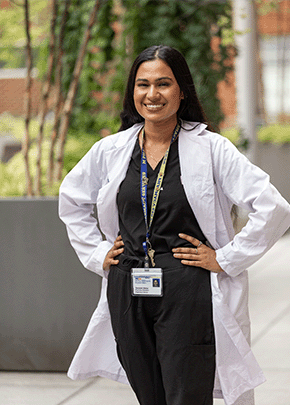


Michigan pharmacist Hae Mi Choe, a nationally recognized leader and innovator in ambulatory care pharmacy, died July 12 of leukemia. She was 57 years old.
Choe spent most of her career at the University of Michigan and its health system. She developed a team-based model of care that, according to her faculty page, was practiced at 14 of the university’s hospitals and health centers. This model helped establish a foundation for ambulatory care pharmacy practices across the state and the nation.
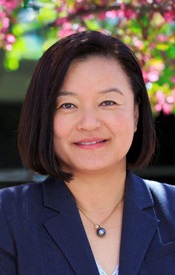
ASHP CEO Paul W. Abramowitz called Choe’s death a tragic loss to the pharmacy community.
“Hae Mi devoted her professional life to creating systems of care that rely on pharmacists as critical providers on the patient-centered primary care team,” Abramowitz said. “She was brilliant, kind, and caring, and her work improved her patients’ lives and helped to advance pharmacy practice.”
ASHP Past President Paul C. Walker, who was Choe’s supervisor during her early years at the University of Michigan, called her a trailblazer who normalized the expectation that pharmacists practice alongside physicians in primary care settings. As part of this process, Choe led a successful effort to establish a credentialing and privileging program for the medical center’s pharmacists.
“She worked diligently winning the medical staff over,” Walker recalled. “She gained the confidence of the medical staff in terms of her clinical capabilities, and she really was behind the whole credentialing process for us at Michigan.”
Choe was enthusiastic about sharing her academic and administrative successes with the broader pharmacy community. She wrote or coauthored about four dozen reports that were published peer-reviewed journals, including AJHP. Her writings covered diabetes, hypertension, palliative care, population health, transitional care, ambulatory care practice models, and other topics. She was an active participant in the ASHP Section of Ambulatory Care Practitioners, and she served as a manuscript reviewer for AJHP and other publications.
ASHP honored Choe in 2011 with the Best Practices Award in recognition of her successful integration of pharmacists into the patient-centered medical home model of care at the University of Michigan Hospital and Health Systems. This year, Choe was named the recipient of the ASHP Distinguished Leadership Award, honoring her as a visionary practitioner whose work has transformed ambulatory care practice.
Other organizations that have recognized Choe’s accomplishments include the Michigan Society of Health-System Pharmacists (President’s Award, 2016); the Southeastern Michigan Society of Health-System Pharmacists (Innovative Practice Award, 2016); the American Association of Colleges of Pharmacy (Crystal Academic–Practice Partnerships for Learning Experience Award, 2008); the National Kidney Foundation of Michigan (Innovative Health Care Award, 2007); the University of Michigan College of Pharmacy (Excellence in Teaching Award, 2006); and the Michigan Pharmacists Association (Innovative Pharmacy Practice Award, 2004).
Choe was a source of encouragement and inspiration to her students, residents, and university colleagues. Amy N. Thompson, director of population health pharmacy and community partnerships at the University of Michigan Medical Group, said Choe hired her nearly a decade ago and quickly became a mentor and supporter.
“She believed in me, pushed me, and showed up for me in ways that changed my life,” Thompson said. “She opened doors, broke through glass ceilings, created opportunities, and shaped the lives and careers of so many. I feel incredibly lucky to have known her, to have learned from her, and to have called her a friend.”
Hae Mi (Park) Choe was born Aug. 18, 1967, in South Korea to Yong Chu Park and Kyung Soon Park. The family emigrated to the United States when Hae Mi was in elementary school, and she was raised in Los Angeles County, California. Choe earned a bachelor’s degree in biochemistry and cell biology from the University of California, San Diego, in 1989 and a PharmD degree from the University of California, San Francisco, in 1993.
In 1994, after completing a pharmacy practice residency program at the Kaiser Permanente Medical Center in Los Angeles, Choe accepted a position at the Samsung Medical Center in Seoul, South Korea, where she implemented the country’s first pharmacist-managed outpatient anticoagulation clinic. Throughout the multiyear project, she overcame substantial cultural, professional, and practice barriers and earned the respect of her physician colleagues. The project was featured in AJHP’s pharmacy abroad column in 2002.
Choe continued her work in Seoul through 1997, serving as a clinical pharmacy consultant at the Samsung Medical Center and an invited lecturer at the Sookmyung University College of Pharmacy. The medical center honored her in 1997 with an award for her contributions and dedicated service.
In 1999, Choe was hired as a clinical assistant professor at the University of Michigan College of Pharmacy and a clinical pharmacist practicing at the East Ann Arbor Health Center. Much of her early work for the health system involved the outpatient management of diabetes and hypertension.
Choe was named director of innovative ambulatory care pharmacy practice for the health system in 2009, and she held other leadership appointments throughout her career. At the time of her death, she was associate dean for pharmacy innovation and partnerships at the University of Michigan College of Pharmacy, chief population health officer for Michigan Medicine, and executive director of the Michigan Institute for Care Management & Transformation.
Choe’s survivors include her husband of 32 years, Yong Choe; her children, Christopher Choe and Allison Choe; and her brother Andrew Park.
Recent Articles

ASHP, Partners Defend Clinicians' Ability to Provide Evidence-Based Off-Label Care
July 23, 2026
ASHP Has New Policies on Standard of Care, Vaccine Access, Pharmacy Education, and More
July 21, 2026