
When patients are admitted to any of the 22 Michigan hospitals that are part of Corewell Health, pharmacy technicians are on the case. About 75 pharmacy technicians take detailed medication histories on some 16,000 patients each month, using a mix of in-person and video visits plus phone calls.
Technicians interview patients and family members and pull medication information from electronic health records at Corewell and other hospitals that use the same records system, creating a full picture of each patient’s current medication status, documenting the information in medical charts and relaying it to providers.
This round-the-clock work to develop an accurate and complete medication history is part of an effort to incorporate ASHP’s Practice Advancement Initiative (PAI) 2030, which includes nearly 60 recommendations to promote optimal, safe, and effective medication use; expand pharmacist and technician roles; and implement emerging technologies.
Corewell’s approach to medication history also reflects the health system’s decision last year to end a siloed system and unite all technicians in one department as a “pharmily,” said Ashley Blanchette, pharmacy manager of the medication history team.
Blanchette said the health system’s west and east regions established medication history pharmacy technician positions around 2007 — shortly after The Joint Commission released its national patient safety goal on medication reconciliation. Up until 2023, the south region contracted with a pharmacist group to do medication reviews for patients being admitted.
Electronic health records were integrated in the work last July “and that’s when we started to really pick up momentum and speed with workflow standardization,” Blanchette said.
"It is instrumental for admitting providers, emergency department and inpatient nurses to understand that a medication history technician is engaged in this advanced transitions of care work,” said Blanchette.
Providers often want to put in medication orders as they’re trying to care for patients, she said. But if it’s clinically appropriate to wait another 30-45 minutes for the technician to finish their review, she said, “that can save us a lot of time on the back end, reaching out about home medications that had to be updated and doses that were recently changed but not yet updated in the electronic record when the provider first saw the list.”
Other clinicians appreciate the work, said Margo Bowman, senior director of clinical pharmacy services.
In some hospitals that have had the medication history service for a while, “I’ve had physicians come up to me to say, ‘Margo, if we didn’t have med history technicians here, I would leave and go someplace else,’” said Bowman. “They’re that vital and integrated. I think people would have some uproar if we stopped doing it at this point.”
Good catches
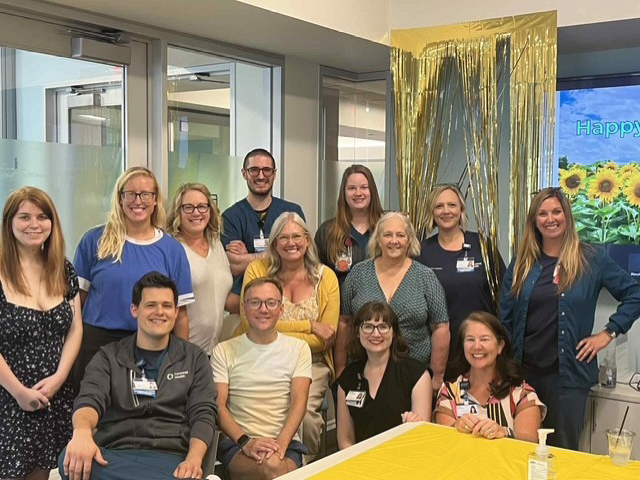
Pharmacy technicians involved in the medication history work have two weekly meetings, where they share safety stories of errors they caught or prevented before patients received medications, said Kelli Menyes, supervisor of the medication history teams for the west and south regions.
“It’s been really critical for us to find those things to prevent any kind of patient safety issues,” said Menyes.
The team recently began listing its good catches in a monthly blog post to further promote and celebrate its successes throughout the health system.
One blog post highlighted a technician who corrected 31 medication errors for one surgery patient.
Other posts featured a case in which a patient being admitted for an infection concern had not been put on antibiotics, and a situation in which a patient didn’t realize they were taking two different SGLT-2 inhibitors that had been prescribed by two different providers. Technicians who identified these two issues won awards from the health system for their efforts.
Another technician discovered that a mother had been giving her baby too much antibiotic because of a language barrier. Menyes said they brought the concern to the provider’s attention.
High employee satisfaction
The department’s employee satisfaction scores consistently rank above the company average, Bowman said. Supervisors are working on career ladders for pharmacy technicians who want to be able to grow into these positions, Menyes added.
“I love my job, and I would argue that most of our team really enjoys doing this work,” Menyes said. “It’s independent, but it’s also team-focused in getting all of your patients completed.”
Blanchette said the team is looking to expand into discharge reconciliation to decrease medication errors that could contribute to hospital readmissions. Blanchette also hopes to assign a medication history technician to a physician group that focuses on high-risk surgical patients.
Pharmacists looking to implement similar systems could benefit from reviewing resources such as the MARQUIS and IPITCH trials, as well as the World Health Organization’s High 5s project, she said.
Corewell Health’s technician program comes from a central budget. Blanchette said that to help justify cost, pharmacists should calculate the cost avoidance from preventing medication errors and related readmissions.
“The biggest thing that could help move this service forward is to bring more recognition and acknowledgement of the advanced skills that we are asking technicians to learn and the responsibility that we’re asking them to take on to support pharmacists in their advanced practice,” Blanchette said.
“There’s not a universal requirement for pharmacy technician education, and that has an impact on the payment system for technicians,” she added. “Being able to offer a career-enabling wage is probably the biggest barrier to recruiting a stronger, healthier workforce of technicians to support this work.”
Recent Articles

ASHP, Partners Defend Clinicians' Ability to Provide Evidence-Based Off-Label Care
July 23, 2026
ASHP Has New Policies on Standard of Care, Vaccine Access, Pharmacy Education, and More
July 21, 2026