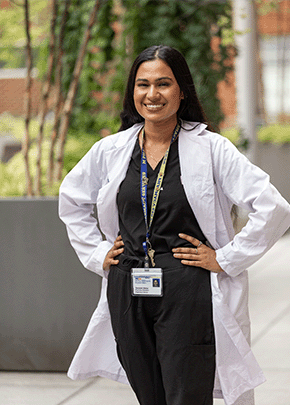
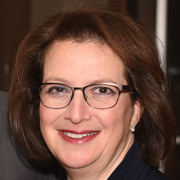

Michelle Easton served for 11 years as dean of the University of Charleston School of Pharmacy in West Virginia, where she transformed student experiences by emphasizing the critical roles pharmacists play in their communities.
“The profession must continue to identify creative ways for student pharmacists to be exposed to and provide high-quality medication care to communities with persistently low access, such as rural areas, traditionally marginalized and underserved communities,” said Easton, who worked as dean from 2008 to 2019.
Now an executive consultant who cares for her aging parents, Easton, who grew up in New Orleans, spoke with the ASHP News Center about her experiences empowering the next generation of pharmacists.
How did you come to take on a leadership role in pharmacy education?
As a student, I didn't think of myself going into academia and administrative roles. But I had role models: My father was an elementary school principal, and my mother was a social worker in the school system. So it was natural for me to see that side of education and training.
At the Helm: Leaders in Pharmacy Education
As the fall term begins for schools and colleges of pharmacy, ASHP is spotlighting some of the deans and associate deans helping shape a new generation of pharmacists.
In high school I was on student council. Volunteering was part and parcel of what we did in our family, so a natural leaning and orientation toward structure, teamwork and working with others were just part of my DNA. As I went through pharmacy school, I had some really good faculty members that I admired. One of them said, “Have you ever thought about maybe teaching pharmacy?” I thought, “No, I'm not going to do that. That's why I chose pharmacy — I don't want to do any of the administrative stuff, and I don't want to do any teaching.”
Lo and behold, things just worked the way they did. I did a pharmacy residency and have always wanted to help make an impact or difference through guidance and leadership.
I was the assistant dean at the University of Charleston School of Pharmacy when our founding dean went to start another school. The president and the provost said, “Michelle, I think you would be great.” I was like, “No, no, no, no. I didn't come here to be the dean. I came here to be the assistant dean.”
I encouraged them to do a national search to make sure they wanted me. That’s how I became the CEO/dean.
In what ways do you believe diversity in pharmacy education can help impact the future of the profession and patient care?
We're all different, and we all bring unique characteristics to the table. Once we come to terms with that, I think things will be a lot better. Health disparities could be significantly (diminished) once we have a better understanding and recognition and appreciation for our differences. In healthcare in particular, great historic injustices have occurred as a result of differences that we have, but there's legacies to those things as well. We're still feeling the impacts.
A rising tide lifts all boats. Recognition and commitment to embracing and understanding that the differences are good will go a very long way.
As a dean, what are some of the initiatives or programs that you're most proud of that supported underrepresented students in pharmacy?
We were able to implement a lot of student-centric programming around professionalization, helping students to see a more holistic view of the profession — helping students go to professional meetings, and be engaged in the profession in different ways. It was eye-opening to our students. Having someone of color and a female at the helm attracted students, so finding ways in which persons could feel comfortable in their own skin and bring their whole selves into the program was extremely important.
We did lots of cultural awareness. We brought in guest speakers who weren't on your traditional beaten path of the profession, to give them a greater awareness of what the possibilities are. When you see it, you can believe it and know you can achieve it. As a school we were extremely successful in doing some national campaigns, winning national awards for programs around professional development and service/giving back. That is part of the ethos that I had growing up, but it was something that was very successful for all of our students, particularly those who look like me.
What types of activities did they do?
They did all sorts of activities, such as going into assisted living facilities or senior centers and talking about the benefits of taking your medications as prescribed. They would also go into the elementary schools. We created a mascot (an eagle dressed up like a pill box) for the pharmacy school that would talk to students about safe medication usage.
In West Virginia, there was tremendous suffering and pain because of the opioid crisis. We mirrored that in our campaign to help students and parents learn about safe medication usage. We also would participate in chili cook-offs and would use that to talk about proton pump inhibitors and over-the-counter medications that can be used for GERD and heartburn. We found creative ways to help people think about [pharmacy] in a different way.
Recent Articles

ASHP, Partners Defend Clinicians' Ability to Provide Evidence-Based Off-Label Care
July 23, 2026
ASHP Has New Policies on Standard of Care, Vaccine Access, Pharmacy Education, and More
July 21, 2026