
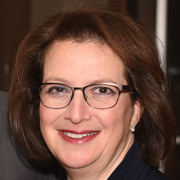

As legislative director-at-large for the Nevada chapter of ASHP, Adam Porath frequently testified before his state board of pharmacy on regulatory issues until he began to wonder: What would it be like to sit on the other side of the table?
When he learned in 2023 that a board member was leaving, Porath filled out an online application with the governor’s office and agreed to a background check. Less than a year later, he received a phone call: He had been appointed to serve a three-year term.
Porath, who now serves as treasurer for the Nevada State Board of Pharmacy, leaves his day job as vice president of pharmacy services at Renown Health in Reno every six weeks to travel to Las Vegas for two-day meetings with five fellow board members — four other pharmacists and one community member. They spend one day going over disciplinary actions and the next on regulatory work.
Porath said his experience as a health-system pharmacist is critical to his work.
“There’s a lot of stuff that we talk about — whether it be through a disciplinary case or through the regulatory process when we’re writing board rules — that is either unique to health-system pharmacy practice, or there is an aspect of health-system pharmacy practice that we need to make sure that we consider,” he said. “Having that expertise on the board is super important.”
Porath is one of about 60 ASHP members nationwide involved in their state boards of pharmacy, said Anna Legreid Dopp, ASHP’s senior director of government relations, who organized a networking session for state board members at the 2025 Midyear Clinical Meeting & Exhibition in Las Vegas, Nevada.
Attendees discussed their work on medication supply, preparation and compounding; pharmacist and technician licensure; pharmacist practice authorization; and technology implementation.
“The practice of pharmacy has a lot of breadth to it — there’s so much diversity in practice settings and the services that those practice settings offer,” Legreid Dopp said. “Health systems are a very different setting of care than other areas of pharmacy practice and require very different considerations as it relates to medication preparation and caring for patients.”
Stacey Ranucci, director of ambulatory and value-based pharmacy practice at Care New England Health System in Rhode Island, has been involved with her state board of pharmacy for the past nine years. When her tenure on the Rhode Island Board of Pharmacy started, she was working as a consultant pharmacist embedded in long-term care facilities and brought her expertise in geriatrics to the board of pharmacy.
“Now that I’ve transitioned to the outpatient ambulatory space, I’m one of two current members on the board working within a health-system setting,” she said.
Among initiatives she’s helping champion is a proposal to make Rhode Island one of the first states to offer the Uniform Multistate Pharmacy Jurisprudence Examination® (UMPJE) for pharmacists, rather than a state-specific exam. She’s also been working to expand collaborative practice for pharmacists, in collaboration with the Rhode Island Department of Health.
“Having a national and regional lens is very helpful when we’re trying to move forward with expanded pharmacy practice models,” Ranucci said. We do not have enough primary care providers across the state to take care of our citizens. As a profession, we are looking to see how pharmacists can support the communities and health systems to expand the pharmacist’s scope of work and alleviate the pressure on the emergency departments and inpatient settings for chronic disease management.”
Pharmacy technicians also have a growing presence on state boards of pharmacy. Andrew Meador, a clinical education specialist with the pharmacy technician program at IU Health in Indianapolis, was active with the Indiana Pharmacy Association for five years while it pushed for the addition of a technician to the state board. Once that legislation passed in 2020, Meador began attending state board of pharmacy meetings to learn more. A year later, he applied for a board position and was appointed in 2024.
Meador says he enjoys staying at the forefront of discussions and bringing the technician's viewpoint to discussions. Some of the issues he has discussed with the board are sterile and nonsterile compounding, safe handling of GLP-1 medications, and discussions about the national MJPE exam.
“I’m always an advocate of checking out your state board,” Meador said. “At least once a year, go to a meeting or watch a meeting online, just to get a pulse for how your pharmacy boards operate.”
That involvement helps hold the board more accountable, Meador says, and it helps individuals understand the legislative work behind regulations and board practices. Technicians can use the opportunity to advance their profession.
“One of the biggest issues that I see in pharmacy right now is the gap in education between a pharmacist and a technician,” he says. “I will always advocate for technicians to be educated and well-trained so they can assist the pharmacist in any way they possibly can.”
About 25 states now have technician representation on their boards, said Meador, who has participated in a smaller networking group of those colleagues.
“We’re very supportive of having pharmacy technicians on boards of pharmacy because regulations in their states impact their practice as well, and they bring a very unique and valuable expertise to the table,” Legreid Dopp said.
As part of his service, Porath learned the disciplinary process against pharmacists or pharmacies that violate laws or regulations and now views it as one of the most rewarding parts of the work. Some of his board’s recent efforts have cracked down on medical spas in Las Vegas using unlicensed individuals to deliver Botox injections.
“The whole purpose of the board is to protect the public,” he said, “so we’re able to perform that function through some of those disciplinary actions."
Getting on state boards of pharmacy typically requires a governor’s appointment. Members urge pharmacists and technicians to get involved in their pharmacist state associations to understand what’s happening. “Express that you want to be on the board of pharmacy and that you have questions about it,” Ranucci said.
ASHP members who serve on their state boards of pharmacy and would like to participate in the networking group may contact Anna Legreid Dopp at [email protected].
Recent Articles

ASHP, Partners Defend Clinicians' Ability to Provide Evidence-Based Off-Label Care
July 23, 2026
ASHP Has New Policies on Standard of Care, Vaccine Access, Pharmacy Education, and More
July 21, 2026