

The reimagining of ASHP's Practice Advancement Initiative (PAI) 2030 is well underway, and the experts who are shaping the project are enthusiastic about participating in this complex, forward-focused undertaking.
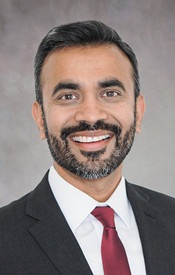
“I think it’s our ethical imperative to really set up our future generations for long-term success by doing this work,” said PAI Advisory Panel Chair Kuldip Patel, senior associate chief pharmacy officer for Duke University Health System in Durham, North Carolina. “We’re staring at a pivotal moment. Either we’re going to stand still and be changed, or we’ll drive that change.”
PAI provides tools and guidance that help the pharmacy workforce practice at its fullest potential in diverse care settings. The initiative is structured so that individual pharmacists, pharmacy departments, and hospitals and health systems can create a tailored implementation plan that identifies and addresses specific care gaps and needs.
Patel said PAI has long been a high-value resource for the profession.
“Many of the leaders that I work with have used the work to help drive their strategic plans and priorities over the years,” Patel said. He added that now is the time to reflect on what pharmacy practice will look like in the next few years and how to position the profession for that future.
Panel member Maari Loy, pharmacy operations senior manager at Essentia Health in Fargo, North Dakota, said she has gained important new perspectives on PAI by participating in the advisory group.
“It’s been really interesting and eye-opening for me,” Loy said. “The exciting thing about PAI is that it has actionable items for us. And a lot of the behind-the-scenes work for references and citations, or how to get the practice accomplished, has already been done.”
Eric Maroyka, senior director of practice advancement and policy development at ASHP, said PAI has its roots in the 2010 Pharmacy Practice Model Initiative and the related ASHP–ASHP Foundation Ambulatory Care Summit of 2014 and ASHP Health System Pharmacy 2015 Initiative.
“Together, these initiatives all align with and complement the ASHP Strategic Plan and the ASHP Pharmacy Forecast, emphasizing member-driven priorities, environmental scanning, and strategic planning to envision the future of pharmacy practice,” Maroyka said.
The current version of the initiative, PAI 2030, was approved by the ASHP Board of Directors in 2019 as a 10-year road map for the profession. PAI 2030 features 59 recommendations within five big-picture domains: patient-centered care; the pharmacist’s role, education, and training; technology and data science; the pharmacy technician’s role, education, and training; and leadership in medication use and safety.
Each element of PAI 2030 was adopted through consensus, with input from an expert panel, ASHP members, affiliated state societies, pharmacy educators, and national pharmacy and healthcare organizations.
That deliberative process also guides the reimagining of PAI 2030 for a new target year. The initial 10-year timeline is being reconsidered as the profession adapts to disruptive influences — in particular, increased workforce demands, artificial intelligence technology, and the availability of ultra-high-cost drugs and advanced therapeutics — that affect pharmacy operations and the business of healthcare.
Pharmacy technician Zach Tolman, medication access coordinator at the University of Utah Huntsman Cancer Institute and a member of the PAI Advisory Panel, noted that the growing complexity of insurance requirements for lifesaving therapies is also a disruptive factor in healthcare.

“I supervise our team of technicians that are over prior authorizations, benefit investigations, and patient assistance support for oncology medication access,” Tolman said. “It’s like we’re in a super evolution period. As soon as you get used to one thing, there’s a new gimmick to navigate.”
Tolman said his main motivation for joining the advisory panel was to share and gain perspectives on issues that the pharmacy workforce needs to prepare for. He said the project has given him a unique opportunity “to sit with a group of peers and just talk about things that are five years in the future and ... how to adapt to things that we haven’t even seen yet.”
After an initial survey of advisory panel members and select contributing experts, the panelists met in October 2025 at ASHP’s Conference for Pharmacy Leaders in Chicago, Illinois. Much work has taken place since then to incorporate feedback from ASHP sections and forums, TPTS, and other membership groups.
Upcoming major steps include the launch of a survey about the proposed PAI recommendations and the solicitation of public comments on a revised draft. After additional expert review and final approval by the ASHP Board of Directors, the revised recommendations will be ready for implementation.
Although it’s too early to know what the reimagined version of the initiative will look like, general themes have emerged from the advisory group.
Loy said there was agreement that the recommendations should better reflect the breadth of pharmacy practice.
“We need to make sure that we’re meeting and highlighting opportunities for all different practice areas,” Loy said. “So we need to learn to pivot and kind of reset the sights.”
Patel said the revised version’s goals, domains, and recommendations will be more practical and less complex than in the original PAI 2030.
“We want to make sure that we have a sustainable model through all of the different changes that are going on in the healthcare landscape,” he emphasized.
As the reimagining project proceeds, Tolman encouraged all pharmacy stakeholders to share their opinions about the draft recommendations and to implement the revised version of PAI at their workplace.
“I guarantee that there’s at least one aspect of this that will impact their area of practice at some point,” he said.
Recent Articles

ASHP, Partners Defend Clinicians' Ability to Provide Evidence-Based Off-Label Care
July 23, 2026
ASHP Has New Policies on Standard of Care, Vaccine Access, Pharmacy Education, and More
July 21, 2026