

Next-generation therapies drove the conversation at ASHP headquarters in March as two influential advisory groups discussed the societal opportunities and challenges these treatments present and how the pharmacy profession and health systems can better plan for and manage them.
The ASHP Commission on Goals convened March 10 for a broad discussion of cell and gene therapies (CGTs) and other ultra-high-cost drugs. The purpose of the annual meeting is to help the ASHP Board of Directors guide ASHP’s strategic direction. Members of the interdisciplinary commission represent pharmacy, medicine, nursing, public health, industry, and the federal government.
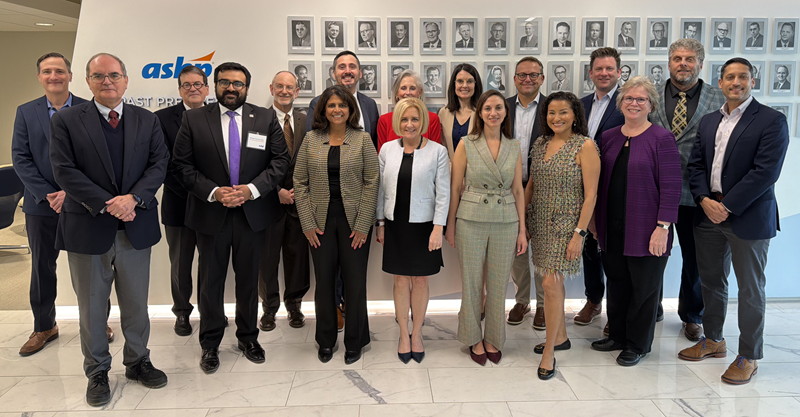
Throughout the daylong meeting, attendees shared their experiences and concerns about the developmental, clinical, operational, financial, regulatory, and administrative ecosystem that is evolving for next-generation therapies. The overall agenda covered infrastructure and readiness for care delivery; patient access; evidence and monitoring; and payment and policy reform.
Later that week, the commission’s discussion helped refine the agenda for the March 12 inaugural meeting of the steering committee for the ASHP Center for Next-Generation Therapeutics. ASHP launched the center to serve as the organization’s hub for next-generation therapies and to draw together resources for their management.
The center serves as the dissemination point for best practices, informs the development of new products and services, and provides strategic direction for the healthcare system, the profession, and ASHP.
The steering committee was established this year to set priorities for the new center. Most steering committee members are pharmacists who started out as clinicians but now have administrative oversight of their organization’s use of next-generation therapeutics.
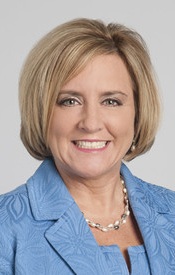
Steering Committee Chair Mandy Leonard, system director for drug use policy and formulary management at Cleveland Clinic in Ohio, said she’s excited to be providing guidance on this revolutionary change in patient care that spans the clinical, operational, and financial aspects of pharmacy.
“Bringing this group of experts together just shows how important this topic is to the ASHP membership,” she said.
Leonard said the steering committee, the Commission on Goals, and the recommendations from last year’s ASHP Summit on Advanced Therapeutics are all aligned to bring clarity to the profession on how to integrate these treatments into patient care.
In a nod to the complexities that surround next-generation therapeutics, one of the steering committee’s tasks during the inaugural meeting was to define the scope of this therapeutic category, leaving room to include emerging products and technologies.
The committee members also discussed the complexities of moving novel therapies from the lab to the bedside and the need to collaborate with laboratory experts and product manufacturers to streamline that process.
Committee members agreed that successful management of these therapies requires close collaboration among the entire medical team, including care management staff, physicians and advanced practitioners, and nurses and pharmacists. These collaborative relationships fall within the scope of the center’s future activities.
Additional topics that arose during the meeting included:
- Maintaining a patient-first focus on the use of next-generation therapies
- Caring for patients across the care continuum, including within facilities that are not primary treatment centers
- Pharmacy workforce constraints and training burdens
- Product pipeline monitoring and product-specific onboarding needs
- Communication with health-system executives and finance staff about unique budgeting needs
- Clarification of pharmacy’s role in CGT preparation and use
- Preparing for the pharmacy of the future and what new infrastructure will be required
- Education of healthcare providers about what next-generation therapeutics are
- Building confidence within the pharmacy workforce about managing these therapies

An underlying theme for the committee was the certainty that regardless of where it stands now, the pharmacy profession will ultimately be clinically, administratively, and financially accountable for next-generation therapeutics.
That situation underscores the importance of the steering committee’s work.
“It’s an opportunity to help guide the future of how we deal with this area of therapeutics,” said Heidi Trinkman, advanced therapeutics program manager at Cook Children’s Health Care System in Fort Worth, Texas, and vice chair of the steering committee. “And it’s an opportunity to shape resources and education and to assist and learn from each other.”
An executive summary of the Commission on Goals annual meeting will be published in AJHP later this year. The steering committee will continue to meet quarterly and, in collaboration with the ASHP sections, form work groups and develop priority projects.
Recent Articles

ASHP, Partners Defend Clinicians' Ability to Provide Evidence-Based Off-Label Care
July 23, 2026
ASHP Has New Policies on Standard of Care, Vaccine Access, Pharmacy Education, and More
July 21, 2026